

Featured Solutions and Suppliers
Interested in a solution? Click "View Supplier" to learn more about the supplier.

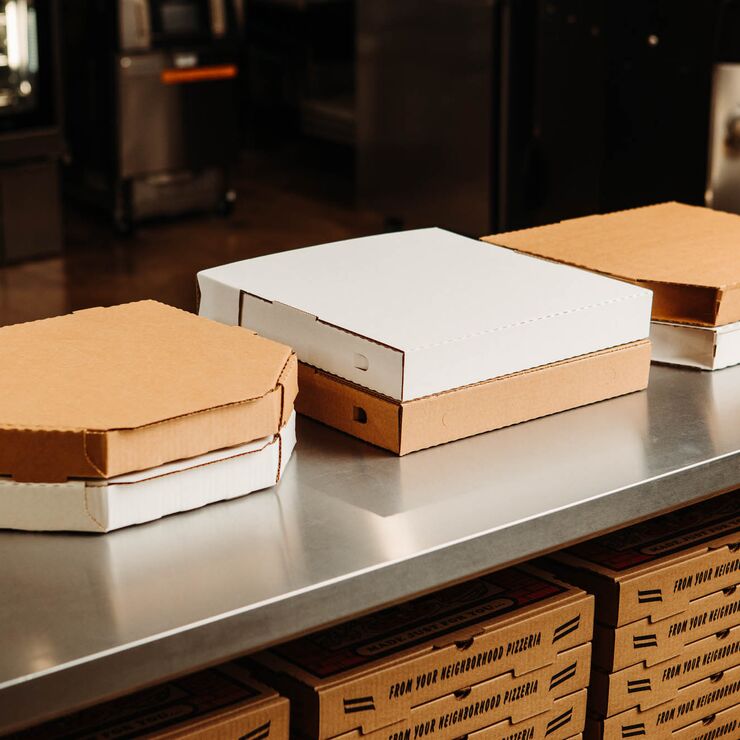

What Actually Makes a Pizza Box Recyclable
Corrugated cardboard is the base material for virtually all pizza boxes, and it is one of the most widely recycled packaging materials in the country. The Fibre Box Association and major recycling programs have confirmed that typical grease and cheese residue from ordinary pizza contact does not prevent boxes from being recycled. The pulping process used by paper mills can handle normal food contact levels, and the "greasy pizza box" recyclability concern is largely a myth that has been repeated so often it has taken on a life of its own.
The actual recyclability risks come from what gets added to the cardboard, not from the pizza itself. Plastic films, wax coatings, and heavy polymer barriers interfere with the pulping process and can disqualify a box at the materials recovery facility or paper mill, even if the underlying corrugated board would otherwise recycle cleanly. Boxes built on these treatments are technically cardboard but functionally non-recyclable in most curbside programs. Recyclable pizza boxes instead use uncoated corrugated board, water-based barrier coatings, or clay-coated surfaces that remain compatible with paper recovery streams.
Flute type (typically B-flute, E-flute, or a combination) affects structural rigidity and material weight but does not determine recyclability on its own. Recycled fiber content, which can range from around 35% to 100% post-consumer material depending on the supplier, is a separate sustainability variable worth asking about directly. Recycled content claims vary widely across the market and are not always independently verified, so chain-of-custody certification through FSC or SFI is the cleaner way to confirm what you are actually buying.
PFAS Is the Issue Most Buyers Are Not Asking About
Historically, some pizza box manufacturers used PFAS (per- and polyfluoroalkyl substances) as grease-proofing agents in paper and paperboard food packaging. PFAS provide strong oil and water resistance, which made them useful in food-contact applications for decades. The problem is that these compounds are extraordinarily persistent in the environment and have been linked to health and contamination concerns, which is why they are now widely referred to as "forever chemicals."
The regulatory picture has shifted significantly. The FDA confirmed that PFAS-based grease-proofing agents for paper and paperboard food packaging are no longer being sold in the U.S. market, completing a voluntary phase-out with manufacturers. That federal action addressed the primary domestic supply source. Separately, a growing number of states have enacted their own enforceable bans on intentionally added PFAS in food packaging, including New York, Washington, Vermont, Connecticut, Colorado, Minnesota, Maryland, Oregon, Hawaii, Rhode Island, and Illinois, with additional states moving through legislation. Pizza boxes are explicitly named in several of these laws, which means this is not a general packaging regulation that might apply to your product. It is a regulation written around your product specifically.
A supplier claiming a recyclable, sustainable pizza box today should be able to provide a certificate of compliance confirming no intentionally added PFAS. Some states also apply total organic fluorine screening thresholds, so "no intentionally added PFAS" and full compliance are not always the same thing. Buyers distributing across multiple states should verify compliance state by state, as requirements and testing thresholds vary.
How to Choose a Recyclable Pizza Box Supplier
Corrugated pizza boxes are a relatively mature category and the supplier landscape is broad, which means the differences between a strong sourcing decision and a weak one are often hidden in documentation and materials details rather than obvious from a product sample. The 5 P's provide a useful frame for working through those differences before supplier conversations begin.
Price matters, but this is a category where aggressive pricing sometimes comes at the cost of recycled content verification, PFAS compliance documentation, or coating quality. Performance means the box needs to hold heat, resist grease migration through the base during delivery, and maintain structural integrity through the full transit cycle for your specific distribution model. Preference reflects your brand or restaurant's sustainability positioning: if you are making environmental claims to customers, you need supplier documentation that supports those claims, not just printed language on the outside of the box. Proof is the most important factor, covering PFAS-free certificates of compliance, chain-of-custody records for recycled fiber content, and any state-specific compliance documentation relevant to where you sell. Partner quality matters because regulations in this category are still moving and a supplier who tracks PFAS legislation proactively is meaningfully more valuable than one who waits for mandates before updating their compliance posture.
When talking to suppliers, ask specifically which states they have current compliance documentation for, whether they test to total organic fluorine standards in addition to intentionally added PFAS standards, and what their recycled content claims are based on. If a supplier cannot answer the PFAS documentation question clearly and quickly, that is a signal worth paying attention to.
Are pizza boxes actually recyclable if they have grease on them?

What is the difference between a recyclable pizza box and a compostable one?