

Featured Solutions and Suppliers
Interested in a solution? Click "View Supplier" to learn more about the supplier.
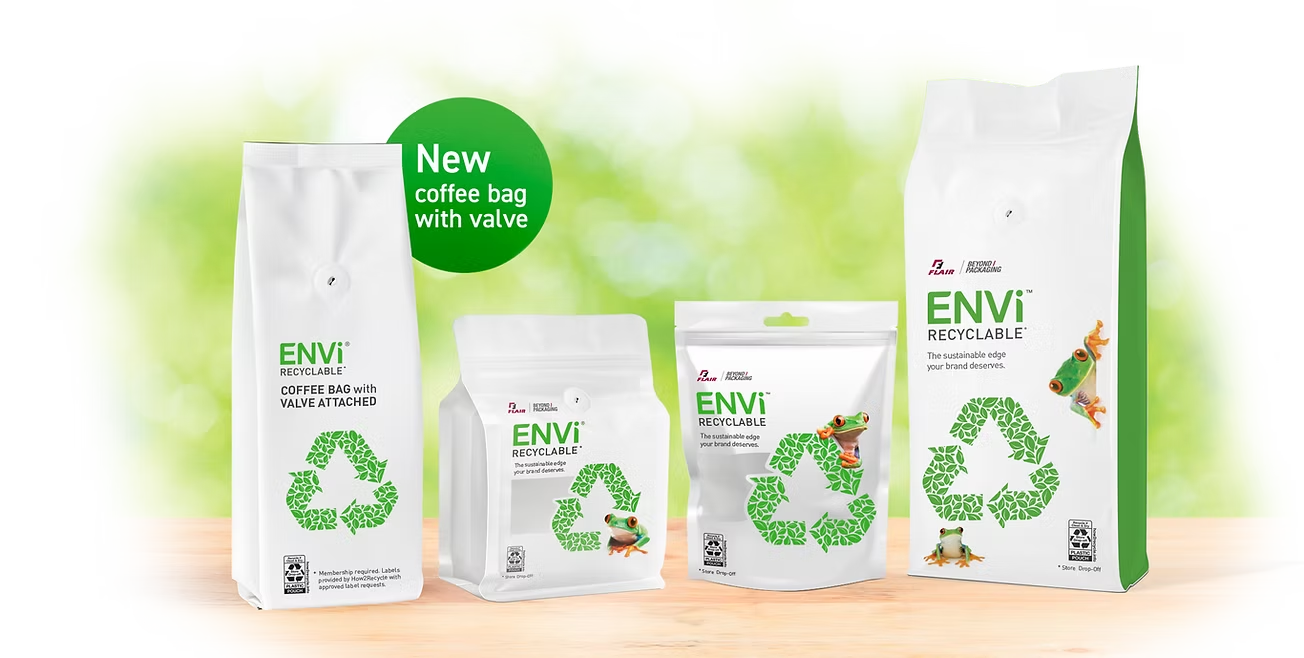

Materials Used in Mono-Material Pouches
Mono-material pouches use single polymer family construction where all layers belong to the same plastic type, allowing recycling together without material separation.
Polyethylene (PE) polymer family structures are the most widely used recyclable flexible packaging, combining different PE grades performing specific functions. HDPE (high-density polyethylene) provides stiffness and structural strength, LLDPE (linear low-density polyethylene) delivers strong sealability, and barrier PE layers improve oxygen or moisture resistance. Although pouches contain multiple layers, all are polyethylene family members processing together during recycling. This design maintains performance while simplifying material recovery through established PE store drop-off programs. PE structures dominate mono-material pouch market due to mature recycling infrastructure.
Polypropylene (PP) polymer family structures offer higher stiffness than PE, good moisture barrier properties, and excellent print clarity. These use BOPP (biaxially oriented polypropylene) for structural layers, cast polypropylene for sealant layers, and barrier-coated PP films. PP mono-material pouches perform well in many applications but depend on evolving recycling infrastructure less established than PE systems in some markets. PP generally provides stronger moisture barriers than PE making it preferred for moisture-sensitive products, though brands should verify PP film drop-off availability where operating.
Barrier coating technologies replace aluminum foil and metallized layers because traditional foil prevents recyclability. Ultra-thin coatings including aluminum oxide (AlOx), silicon oxide (SiOx), transparent barrier coatings, and specialized polymer barrier layers improve oxygen and moisture resistance without significantly interfering with recycling. These coatings enable mono-material structures to approach traditional laminate performance, though slightly higher oxygen transmission rates may remain versus aluminum foil requiring validation for highly oxygen-sensitive products like premium coffee or certain snacks.
Component compatibility requirements ensure complete system recyclability. Zippers, spouts, degassing valves, labels, and adhesives must use materials from the same polymer family as primary pouch film. PE pouches require PE-compatible zippers and valves, PP pouches need PP-compatible components. Mixed polymer components contaminate recycling streams even when primary film is mono-material. Suppliers should provide component material specifications and compatibility documentation verifying system-wide recyclability.
How Mono-Material Pouches Enable Recycling
Mono-material design enables recycling by eliminating material separation barriers that prevent traditional multilayer laminate recovery, though real-world infrastructure and component challenges affect outcomes.
Single polymer family processing allows entire pouch to recycle together. Traditional multilayer laminates combine PET, PE, PP, aluminum foil, and adhesives where each material provides specific functions (structural strength, sealability, oxygen barrier, moisture protection). Once laminated, materials can't separate during recycling causing most traditional flexible packaging to reach landfill achieving less than 1% recovery. Mono-material pouches solve this ensuring all layers belong to same recycling stream processing without separation.
Store drop-off recycling infrastructure provides collection pathway. Mono-material flexible pouches require store drop-off programs where consumers return plastic films to retail collection bins, not curbside systems. Roughly 80% U.S. population has geographic access to store drop-off but participation runs under 20% due to inconvenience requiring consumers save pouches separately and remember returning them when shopping. This participation barrier affects real-world recovery rates despite technical recyclability. PE infrastructure more established than PP in most regions.
Component compatibility challenges affect overall recyclability. Even when pouch film is mono-material, zippers, spouts, degassing valves, labels, and adhesives using incompatible materials reduce package recyclability. Packaging designers increasingly ensure components belong to same polymer family as pouch film, but this remains evolving area requiring supplier verification. Water-activated tape and paper labels maintain better recyclability than plastic-based alternatives when needed.
Barrier performance considerations involve trade-offs versus traditional laminates. Mono-material structures with barrier coatings can deliver slightly higher oxygen transmission rates versus aluminum laminate packaging. For highly oxygen-sensitive products (premium coffee, certain snacks), this may require nitrogen flushing, slightly shorter shelf life targets, or thicker film structures. Careful testing ensures product protection remains adequate before large-scale transitions. Many products successfully use mono-material pouches while maintaining adequate shelf life.
How to Choose Mono-Material Pouch Suppliers
Selecting suppliers requires evaluating material design, coating technologies, and manufacturing precision significantly affecting packaging performance and recyclability outcomes.
Request verified barrier performance data including oxygen transmission rate (OTR) and moisture vapor transmission rate (MVTR) metrics indicating packaging effectiveness protecting products from oxygen and moisture exposure. Compare values to current packaging ensuring adequate performance, as barrier coatings approach but may not fully match aluminum laminate OTR levels. Product-specific testing validates whether mono-material alternatives maintain required freshness and shelf life. Suppliers should provide independent laboratory testing versus self-testing.
Verify recyclability documentation and component compatibility. How2Recycle program evaluates packaging designs determining appropriate consumer recycling instructions. Suppliers should reference Association of Plastic Recyclers (APR) or Flexible Packaging Association (FPA) guidelines ensuring designs align with recycling system capabilities. Request documentation confirming all pouch components (zippers, valves, spouts, labels, adhesives) use materials from same polymer family as primary film. Third-party validation reduces greenwashing risk versus supplier self-certification.
Assess manufacturing expertise and material options. Mono-material packaging requires specialized capabilities in film extrusion, barrier coating technologies, flexible pouch converting, and seal integrity testing. Experienced manufacturers deliver more consistent film performance and packaging reliability. Evaluate whether suppliers offer both PE and PP options allowing material selection matching product requirements and regional infrastructure. Some products perform better with PE moisture resistance while others benefit from PP stiffness and clarity.
Evaluate supply chain reliability and customization. Consider supplier manufacturing location (North America/Europe preferred by many brands), lead times, minimum order quantities affecting inventory, and production capacity scaling to volume needs. Customization including multiple pouch formats (stand-up, flat-bottom, pillow bags), size options, printing capabilities, and zipper/valve configurations maintains operational flexibility while improving sustainability. Right-sized pouches prevent over-packaging reducing material waste.
