

Featured Solutions and Suppliers
Interested in a solution? Click "View Supplier" to learn more about the supplier.

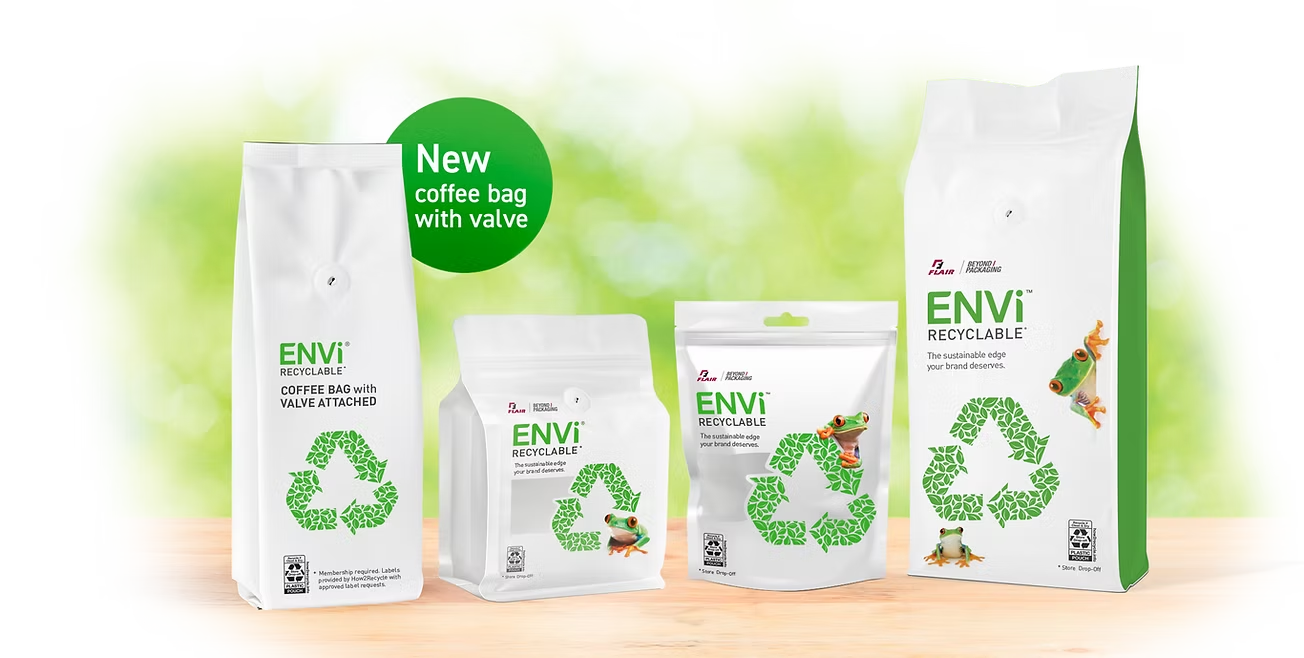


What are Recyclable Coffee Bags
Before we dive into how to choose the right recyclable coffee bag supplier, let's define what we're actually talking about.
Recyclable coffee bags are designed to be collected by municipal or private recycling programs, sorted correctly at Materials Recovery Facilities (MRFs), processed into usable raw materials, and sold to manufacturers who reuse them. If any one of those steps fails, the bag is technically recyclable but functionally trash. Recyclability depends on local infrastructure, not just materials. Coffee bags aren't universally recyclable, as collection, sorting technology, and reprocessing capabilities vary dramatically by region.
The critical challenge: coffee needs strong barriers against oxygen (which causes rancidity and flavor degradation), moisture (which accelerates staleness), light (which breaks down oils), and aroma loss (volatile compounds escaping through packaging). Traditional multilayer films combining PET, PE, OPP, and aluminum excel at protection but mix materials that block easy recycling because MRF sorting equipment can't separate bonded layers.
The solution: mono-material structures using single-polymer films (mono-PE or mono-PET) sort easily at MRFs, yield high-value resin that manufacturers want to buy, and reduce contamination in recycling streams. However, mono-materials typically offer weaker barriers than multilayer laminates, which may compromise shelf life from 12 to 18+ months down to 6 to 9 months without barrier innovation like dispersed barrier coatings, vacuum packaging, or modified atmosphere packaging.
A key distinction: curbside recyclable means accepted in residential recycling programs (the gold standard but rare for flexible films), while store drop-off recyclable means consumers must return bags to retail collection points (lower participation rates, often yields lower-value outputs like lumber rather than food-grade resin). Always verify which system applies before making claims.
Recycling Limitations for Flexible Coffee Packaging
Recyclable coffee bags represent major improvement over traditional laminates but face real-world limitations affecting actual recovery rates and environmental outcomes.
Store drop-off only, not curbside. Flexible plastic packaging is more difficult to process than rigid containers because thin films wrap around sorting equipment, contaminate mechanical recycling systems, and reduce processing efficiency. Most recyclable flexible packaging designs for store drop-off recycling programs at grocery stores, retail chains, and supermarkets rather than curbside collection. This creates participation barriers because consumers must save bags separately, remember to bring them when shopping, and locate bins.
Consumer participation rates remain low despite infrastructure access. Roughly 80% of U.S. population has geographic access to store drop-off programs, but participation runs under 20% due to lack of awareness, inconvenient drop-off locations requiring extra trips, and confusion about recycling rules. Brands should consider real-world recovery rates (10 to 20% for recyclable flexible packaging) versus theoretical recyclability when evaluating sustainability claims.
Material contamination reduces recycling efficiency. Flexible packaging contaminated by food residues, oils, moisture, or non-compatible materials can interfere with recycling processes. Coffee packaging may contain residual coffee oils or grounds reducing recycling quality if not cleaned. While minor contamination is often manageable, heavy contamination can make materials unrecyclable despite mono-material design.
Multi-material components complicate recycling. Even if the bag itself is recyclable, degassing valves, zippers, tin ties, adhesives, and labels can contaminate recycling streams if made from incompatible materials. Packaging designers increasingly ensure components belong to the same polymer family as main film, but this remains an evolving area requiring supplier verification.
Choosing a Recyclable Coffee Bag Supplier
With all these sustainable options, which one should you actually choose? Every supplier, manufacturer, and converter will tell you why you should buy their product, so you need some intel before those conversations to make sure you're making the right decision based on your situation.
When evaluating suppliers, think about the 5 P's:
Price: Can you afford potential cost increases for mono-material structures, barrier innovations, and shorter shelf life impacts?
Performance: Will mono-material barriers protect your roast adequately, or will you need vacuum packaging or modified atmosphere to maintain shelf life?
Preference: Does recyclable align better with your markets' infrastructure (strong recycling systems) versus compostable (limited composting access)?
Proof: Can they document curbside or store drop-off acceptance rates in your regions and provide MRF sortation testing results?
Partner: Will they help you navigate regional regulations, verify infrastructure access, and innovate barrier solutions for your roast profile?
Here's how to evaluate each for recyclable coffee bags.
Verify Local Infrastructure Acceptance Before Making Claims (Regional Variation Is Massive)
Recyclability depends on local infrastructure, not just materials. Coffee bags aren't universally recyclable, so you must verify collection, sorting, and reprocessing capabilities by region before making any recyclability claims. This is the most important point because it prevents greenwashing and regulators increasingly demand proof of access, not just theoretical recyclability.
In North America, flexible film curbside recycling is rare. Most municipal programs don't accept flexible packaging (including coffee bags) in curbside bins because films jam sorting equipment, contaminate paper and cardboard bales, and have limited end-market demand compared to rigid containers. Progress exists via pilots and improved sorting technology, but it remains limited to specific regions.
The alternative is store drop-off programs where consumers return bags to retail collection points (grocery stores, big-box retailers). These programs accept clean, dry polyethylene films and some mono-material structures. However, consumer participation rates are low (typically under 5% actually return items), the effort required is much higher than curbside, and outputs often become lower-value products like composite lumber or plastic benches rather than food-grade resin that closes the loop.
Regulations are tightening on recyclability claims. Europe and U.S. states (California, Washington, Colorado) lead with truth-in-labeling laws requiring region-specific proof and access thresholds (often 60% of population must have access). Vague terms like "widely recyclable" risk fines without evidence. The FTC Green Guides emphasize actual collection, sortation, and reprocessing at scale, not theoretical possibility.
This means you must map your specific markets. A bag may be recyclable via store drop-off in California and the Northeast but have no viable end-of-life pathway in rural regions. National brands face difficult decisions: design for the lowest common denominator (limiting claims), use region-specific packaging and claims (higher complexity), or accept that significant portions of customers lack recycling access.
Ask packaging manufacturers: "What percentage of households in my top 10 markets have curbside or store drop-off access for your specific bag structure, and can you provide MRF acceptance documentation?"
Prioritize Mono-Material Structures for Sortation Success (The Best Path Forward)
Mono-materials (mono-PE or mono-PET) are the best path forward for recyclable coffee bags. Single-polymer bags sort easily at MRFs using optical sorters (NIR sensors), yield high-value resin that manufacturers want to buy for new packaging, and reduce contamination in recycling streams compared to multilayer films that mix incompatible polymers.
The challenge: coffee needs strong barriers against oxygen, moisture, light, and aroma loss. Multilayer films combining PET, PE, OPP, and aluminum excel at protection, delivering 12 to 18+ month shelf life for whole bean and ground coffee. These structures are cheap to produce and highly effective, which is why they dominate the market. However, they mix materials that block easy recycling because layers are bonded together and can't be separated at MRFs.
Mono-material alternatives typically offer weaker barriers without innovation. A simple mono-PE pouch might provide 6 to 9 month shelf life versus 12 to 18+ months for aluminum-laminate bags. For specialty roasters with fast inventory turns and direct-to-consumer models, this may be acceptable. For retail distribution requiring longer shelf life, it creates problems.
Barrier innovation narrows the gap. Options include dispersed barrier coatings applied to mono-materials that improve oxygen and moisture resistance, vacuum packaging that removes oxygen before sealing (extending shelf life even with weaker barriers), modified atmosphere packaging (MAP) that replaces oxygen with nitrogen or CO₂, and high-barrier mono-materials using specialized polymers or nanocomposite technologies (higher cost but improving performance).
Some suppliers offer mono-PE pouches with dispersed aluminum oxide coatings or other barrier layers that maintain recyclability while improving protection. These represent the current sweet spot: better barriers than basic mono-materials, still sortable and recyclable unlike multilayer films, though typically more expensive and not yet matching top-tier multilayer performance.
Degassing valves add complexity. One-way valves that release CO₂ (coffee off-gasses for days after roasting) must be compatible with recycling. Some valves can be removed before recycling, others are designed to pass through recycling systems without contamination. Verify valve recyclability specifically, not just bag material.
Ask companies: "Can you provide mono-material structures with barrier performance data (OTR/MVTR) and realistic shelf life expectations for my roast profile, and are degassing valves recyclable or removable?"
Understand EVOH Barrier Trade-Offs (Great Performance, Recycling Complications)
EVOH (ethylene vinyl alcohol) barriers work great for oxygen blocking but cause recycling issues at high levels. EVOH is an excellent oxygen blocker commonly used in co-extruded multilayer films for coffee, snacks, and other barrier-sensitive products. It performs exceptionally well at low concentrations.
The recycling problem: EVOH at high levels (above roughly 5% of total structure) acts as a contaminant in PE recycling streams. Small amounts can be tolerated and processed, but higher concentrations reduce the quality of recycled resin and may cause rejection at recycling facilities. This creates a dilemma: you want enough EVOH for adequate barriers but not so much that recyclability suffers.
Low-dose EVOH structures (roughly 3 to 5% of total thickness) can be compatible with PE recycling in some systems, especially newer facilities with advanced sortation and processing. However, this is not universal, and acceptance varies by MRF and reprocessor. High EVOH content (10%+ of structure) almost always creates problems and may void recyclability claims.
Alternatives to high-EVOH structures include dispersed barrier coatings (aluminum oxide, silicon oxide, or other thin coatings applied to mono-materials), vacuum packaging combined with lower-barrier materials (removing oxygen mechanically rather than relying solely on barrier), modified atmosphere packaging (MAP) using nitrogen flushing, and next-generation barrier polymers that don't contaminate recycling streams.
The practical implication: if you're using EVOH for barriers, work with suppliers who understand the recycling threshold. Ask for specific EVOH percentages and verify whether local reprocessors accept that level. Don't assume "contains EVOH" automatically means non-recyclable, but don't assume low levels guarantee acceptance either. Regional infrastructure determines outcomes.
Ask converters: "What percentage of your structure is EVOH, and can you provide documentation that reprocessors in my markets accept this level in recycling streams?"
Prepare for Cost and Performance Trade-Offs (Multilayers Are Cheap and Effective)
Switching to recyclable bags raises costs, shelf-life risks, and supplier requirements. Multilayer films are cheap to produce and highly effective at protection, which is why they remain dominant despite recyclability challenges. Moving to mono-materials or recyclable structures typically involves higher material costs (mono-materials with barrier innovations cost more than commodity multilayer films), potential shelf-life reduction (6 to 9 months versus 12 to 18+ months without advanced barriers or packaging modifications), and supplier changes (not all converters offer recyclable coffee bag structures with adequate performance).
Cost increases vary by approach. Basic mono-PE pouches may cost similar to multilayer films but deliver weaker performance. High-barrier mono-materials with dispersed coatings or specialized polymers can cost 20 to 50% more. Adding vacuum packaging or MAP equipment to compensate for weaker barriers requires capital investment in filling operations.
Performance validation is critical. You cannot assume shelf life from material specifications alone. Factors affecting shelf life with recyclable bags include roast profile (light roasts with delicate flavors degrade faster, dark roasts with oils can go rancid), whole bean versus ground (whole beans off-gas more but protect flavor compounds better), storage conditions (temperature, humidity, light exposure), and barrier performance (OTR and MVTR of the specific structure).
Supplier capabilities matter. Not all flexible packaging converters have experience with recyclable coffee bag structures. Look for manufacturers who can provide mono-material options with barrier innovations, demonstrate sortation testing at MRFs showing successful recycling, offer vacuum or MAP compatibility for shelf-life extension, and have experience with coffee-specific requirements (degassing valves, barrier validation, shelf-life testing).
Some brands use hybrid approaches: recyclable bags for direct-to-consumer and subscription models where inventory turns quickly and customers value sustainability, multilayer bags for retail distribution requiring longer shelf life and broader geographic reach, and regional variations based on infrastructure availability (recyclable where systems exist, conventional where they don't).
Ask packaging partners: "What is the total cost comparison including potential shelf-life impacts and waste, and can you provide case studies from coffee brands using recyclable structures successfully?"
Follow Best Practices for Implementation (Map Markets, Add Instructions, Innovate)
Brands serious about recyclable coffee bags should follow these actionable steps. First, map your markets to understand recycling infrastructure. Identify which regions have curbside or store drop-off programs accepting flexible packaging, verify MRF sorting capabilities and reprocessor acceptance, document population access percentages for claims compliance, and plan region-specific packaging or claims strategies.
Second, prioritize mono-material structures with barrier innovations. Work with suppliers on high-barrier mono-PE or mono-PET options, test vacuum packaging or MAP to extend shelf life with weaker barriers, validate performance through accelerated aging for your specific roast, and ensure degassing valves are recyclable or removable.
Third, add clear preparation and disposal instructions. Include on-pack guidance for removing valves if necessary, direct consumers to store drop-off locations where curbside isn't available, use QR codes linking to regional recycling information, and avoid overclaiming recyclability where infrastructure doesn't support it.
Fourth, partner on collection and innovation. Some brands collaborate with retailers on take-back programs, work with suppliers to develop next-generation barrier solutions, participate in industry consortia advancing recyclable flexible packaging, and track regulatory changes that affect claims and requirements.
Fifth, measure and communicate honestly. Track actual recycling rates where data is available, communicate shelf-life trade-offs transparently to customers, position recyclability as part of broader sustainability strategy (not the only metric), and update claims as infrastructure evolves over time.
Ask suppliers: "What implementation support do you provide including preparation instructions, infrastructure mapping, and regulatory compliance guidance for our specific markets?"
