

Featured Solutions and Suppliers
Interested in a solution? Click "View Supplier" to learn more about the supplier.

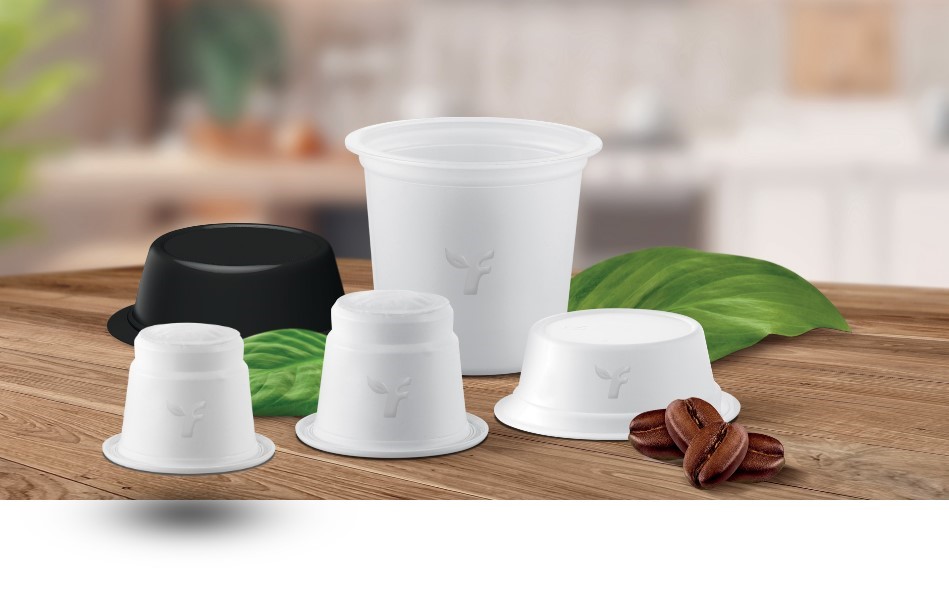

How Compostable Coffee Pods Work
Compostable pods must maintain coffee freshness, withstand brewing heat and pressure, deliver consistent extraction, and break down in composting environments after disposal.
Pod shell materials use bio-based polymers, most commonly PLA (polylactic acid) or PLA blends derived from plant sugars (corn, sugarcane). PLA is modified or blended with other compostable polymers to improve heat resistance, mechanical strength, and pressure tolerance for injection molding into pod shells compatible with Keurig-style, Nespresso-compatible, or proprietary brewing systems. Heat resistance engineering is critical because pods must maintain structural stability at brewing temperatures without softening or deforming.
Compostable filters and lids contain ground coffee and seal pods. Filters use plant-based cellulose fibers, compostable nonwoven materials, or paper-based structures allowing water passage while retaining grounds. Lids made from PLA-based films, cellulose films, or compostable multilayer structures must seal tightly for freshness but puncture reliably when inserted into brewing machines. Both components must meet the same composting standards as pod shells for complete system compostability.
Outer barrier packaging addresses oxygen barrier limitations of compostable materials. Because compostable polymers provide weaker oxygen barriers than traditional plastic or aluminum, pods often require secondary packaging through compostable barrier pouches, recyclable flexible packaging, or nitrogen-flushed bags. This outer packaging extends shelf life by protecting pods from oxygen and moisture during storage, compensating for compostable materials' inherent barrier weaknesses.
Performance Challenges with Compostable Pods
Compostable pods introduce technical challenges requiring careful engineering and testing to match traditional pod performance expectations.
Heat and pressure resistance create primary challenges. Brewing systems operate at 88 to 96°C (190 to 205°F) and force hot water through grounds under pressure. Some compostable polymers soften near this temperature range, potentially causing pod deformation, seal failure, or inconsistent extraction. Pods must withstand pressure without rupturing, as insufficient strength leads to pod bursting, coffee grounds escaping into machines, or incomplete extraction. Engineering compostable materials maintaining rigidity under these conditions remains one of the biggest technical hurdles.
Oxygen barrier limitations affect shelf life. Traditional pods use aluminum or high-barrier plastics providing extremely low oxygen transmission rates. Compostable polymers generally deliver lower oxygen barrier performance, requiring nitrogen flushing, secondary barrier packaging, or shorter shelf life targets. Many compostable pod systems target 6 to 9 month shelf lives versus 12+ months for traditional pods, though this varies by supplier and formulation. Brands should conduct shelf life testing evaluating oxygen exposure, flavor stability, and aroma retention with actual coffee products.
Brewing compatibility requires machine-specific validation. Pod systems are tightly engineered for specific machine designs, and small differences in pod geometry or material properties affect brewing performance. Pods must function reliably with Keurig-style brewers, Nespresso-compatible systems, or proprietary capsule systems. Failure rates, extraction consistency, and machine clogging all require testing with actual brewing equipment before commercial release, as material-level testing alone doesn't predict real-world brewing performance.
How to Choose a Compostable Coffee Pod Packaging Supplier
With all these sustainable options, which one should you actually choose? Every packaging salesperson you speak with will tell you why you should buy their product, so you need some intel before those conversations to make sure you're making the right decision based on your situation.
When evaluating suppliers, think about the 5 P's:
Price: Can you afford the premiums, tooling costs, and potential higher scrap rates?
Performance: Will it survive 90-96°C brewing temps and 8-19 bar pressure without failing?
Preference: Does compostable align with your coffee brand values and consumer expectations?
Proof: Do they have certifications AND actual composting facility acceptance?
Partner: Will they help you through the iteration you'll need (your first design won't be your last)?
Make Sure It Works for Your Coffee (Barrier Performance Is the Primary Failure Mode)
Coffee is one of the most barrier-sensitive products on the shelf. Your packaging must control oxygen ingress (oxidation and staling), moisture ingress (clumping and microbial risk), and aroma loss (flat flavor well before expiry date).
Here's the reality most suppliers won't tell you upfront: commercially available compostable polymers (PLA, PBS, many PHA blends, starch-based systems) have significantly weaker oxygen and moisture barrier properties than aluminum or conventional multilayer plastic structures. Most compostable pod structures deliver 6 to 12 month shelf life compared to 12 to 18+ months for conventional aluminum-lidded pods.
This isn't a supplier quality issue—it's a material limitation. The question isn't whether compostable matches conventional performance (it typically doesn't), but whether the shelf life you'll get aligns with your distribution model and inventory turns.
Ask suppliers: "What shelf life should I expect for my specific roast profile with real coffee-specific validation data?" and "What percentage of your current volume is coffee capsules specifically, not food packaging broadly?" If they claim "9-12 months" without showing you actual roast, grind, fill, and storage testing data, assume that number is theoretical. Coffee capsules are far less forgiving than trays, films, or dry-goods packaging.
Verify It Survives Brewing Conditions (Mechanical and Thermal Performance)
Compostable pods must survive roughly 8 to 19 bar pressure (depending on whether you're targeting K-cup or Nespresso compatibility) and water temperatures around 90 to 96°C during extraction. This is where material science gets brutal.
PLA's glass transition temperature sits around 55 to 60°C, which means it softens well below brewing temperature unless heavily modified or blended. This is a fundamental material limitation, not a processing flaw. Failure symptoms include pod deformation, inconsistent water flow, coffee grounds escaping into the cup, or machine jamming. Even low single-digit failure rates trigger retailer complaints and delisting risk because capsule failures are highly visible to consumers.
Most pod failures don't happen in the body—they happen at heat-sealed seams, filter interfaces, and lid puncture zones. Compostable films behave very differently from conventional plastic films during sealing. Seal windows are narrower, oil tolerance matters, and pressure response during extraction is critical.
Ask suppliers: "Can you show seal strength data under brewing conditions and pressure curve behavior during extraction?" and "What brewing systems have you validated this pod design with at scale?" If they can't provide this data, they're guessing and you'll be the one finding out at full production. You don't want to be their guinea pig.
Get the Paperwork (But Know Certification Isn't Enough)
You need third-party certification that your pod is actually compostable. In the United States, look for BPI (Biodegradable Products Institute) certification to ASTM D6400. In Europe, EN 13432 certification from TÜV Austria or DIN CERTCO. Australia uses AS 4736 via the Australasian Bioplastics Association (ABA).
But here's what most founders miss: certification demonstrates performance under controlled lab conditions. It does NOT guarantee acceptance by municipal or commercial composters in the real world. Facilities may screen out or ban pods that fragment too slowly, leave visible residues, are indistinguishable from plastic in sorting, or create contamination risk at scale.
The entire pod assembly must be certified (body, lid, filter, adhesives), not just the pod body alone. Many certifications are issued at the complete assembly level, but verify this explicitly.
Ask suppliers: "Is the entire pod certified compostable, including the lid, filter, and any adhesives?" "Can you provide certification documentation for the complete assembly?" and "Which composting facilities have you confirmed will accept these pods?" Red flags include claims about "biodegradable" without specific compostability standards, reluctance to share certification documents, or an inability to name actual facilities that accept their pods. Don't rely on marketing claims—get documentation AND composter acceptance.
Know What You'll Pay (And Budget for Iteration)
Compostable coffee pods cost significantly more than conventional plastic pods, and the biggest cost drivers are design decisions made early, not just resin price. Cost premiums typically range 50% to 150% more per pod depending on material choice, barrier requirements, and order volumes. For context, brands ordering around 100,000 pods often see costs in the $0.15 to $0.35 range for compostable versus $0.08 to $0.15 for conventional.
Injection-molded pods require custom tooling, which costs $15,000 to $50,000+ depending on complexity and cavity count. But here's what catches founders off guard: compostable materials shrink differently, cool differently, and wear tooling faster than conventional plastics. Pilot runs often hide variability that full production reveals. You'll likely need iteration cycles to dial in performance.
Minimum order quantities vary widely: large manufacturers often require 250,000 to 500,000+ pods, regional suppliers may start at 50,000 to 100,000 pods, and smaller specialists might accept 10,000 to 25,000 pods at significantly higher per-unit costs. Custom tooling typically requires higher volume commitments.
Additional costs many brands underestimate: higher scrap rates during production (compostable materials are more finicky), quality control losses, potential shelf-life shrink and returns if barrier performance underdelivers, and the reality that you'll probably need secondary packaging to hit acceptable shelf life (more on that below).
Ask suppliers: "What's your minimum order quantity and tooling cost?" "What scrap rates should I expect during production?" and "Do you offer trial runs at smaller volumes?" Budget both the upfront tooling investment and the reality that your first design won't be your last.
Accept That Secondary Packaging Isn't Failure (It's System Design)
Despite marketing pressure to eliminate all extra packaging, here's the reality most brands eventually face: most compostable coffee pods still rely on secondary packaging to achieve acceptable shelf life. This might include high-barrier compostable pouches, recyclable mono-material overwraps, or paperboard cartons with barrier liners.
Many founders eliminate secondary packaging early to achieve visual minimalism, then quietly absorb shorter best-by dates, stale product complaints, and channel restrictions when retailers demand longer shelf life. This isn't a moral failure—it's engineering.
The better approach: design the entire system (pod, secondary packaging, logistics) and evaluate sustainability via lifecycle analysis, not visual minimalism. A compostable pod in a recyclable pouch may have better overall environmental impact than a "naked" pod with 40% shorter shelf life that creates more waste through spoilage.
Ask suppliers: "What secondary packaging systems do successful brands use with your pods?" and "What shelf life can I expect with vs. without secondary barrier packaging?" Be honest with yourself about your distribution model requirements before committing to eliminate protective packaging.
