

Featured Solutions and Suppliers
Interested in a solution? Click "View Supplier" to learn more about the supplier.



-1.png)



.png)


Sustainable Pet Food Packaging Formats and the Materials Behind Them
Pet food packaging operates across five distinct format categories that serve different product types and require different sustainability approaches. The format decision drives everything else, including which materials are viable, which sustainability claims are defensible, and which suppliers have the capability to deliver.
Dry kibble bags are the highest-volume format in the pet food category and one of the most actively evolving areas of sustainable packaging. Large shoulder bags for 15 to 50 pound sizes, flat-bottom stand-up bags for 5 to 15 pound sizes, and smaller stand-up pouches for trial and premium formats all traditionally use multilayer laminate films combining PET, nylon, aluminum, EVOH, and polyethylene layers to achieve the oxygen and moisture barrier required for 12 to 24 month shelf life. These multilayer structures cannot be recycled in standard flexible film streams. The sustainable transition here moves in two primary directions. Mono-material all-PE or all-PP bags with PCR content are now commercially available with EVOH-free barrier technology achieving oxygen transmission rates below 2 cubic centimeters per square meter per day, matching conventional laminate performance while being compatible with store drop-off flexible film recycling programs. Paper-based bulk bags using multi-wall kraft with bio-based extrusion coatings are a second direction for brands prioritizing plastic reduction, reducing plastic content by up to 70 percent versus conventional laminates with resealable paper spouts replacing conventional plastic closures.
Wet food containers span metal cans, flexible foil pouches, and rPET trays. Aluminum and steel cans are already among the most sustainable packaging formats in the category from a lifecycle perspective: both are infinitely recyclable with well-established collection infrastructure, aluminum achieves high recovery rates globally, and cans already dominate wet pet food shelf presence. The sustainability focus for canned wet food is on BPA-free liner specifications and recycled metal content rather than format change. Flexible foil pouches for wet food use aluminum-laminated multilayer structures that present the same recyclability challenges as multilayer dry food films. Mono-PE pouches for wet food applications are an emerging alternative for brands that can accept slightly lower barrier performance. rPET portion trays with peelable lidding incorporate 75 to 100 percent post-consumer recycled content and are recyclable in rigid PET streams, making them a strong sustainable option for refrigerated and fresh-adjacent wet food segments.
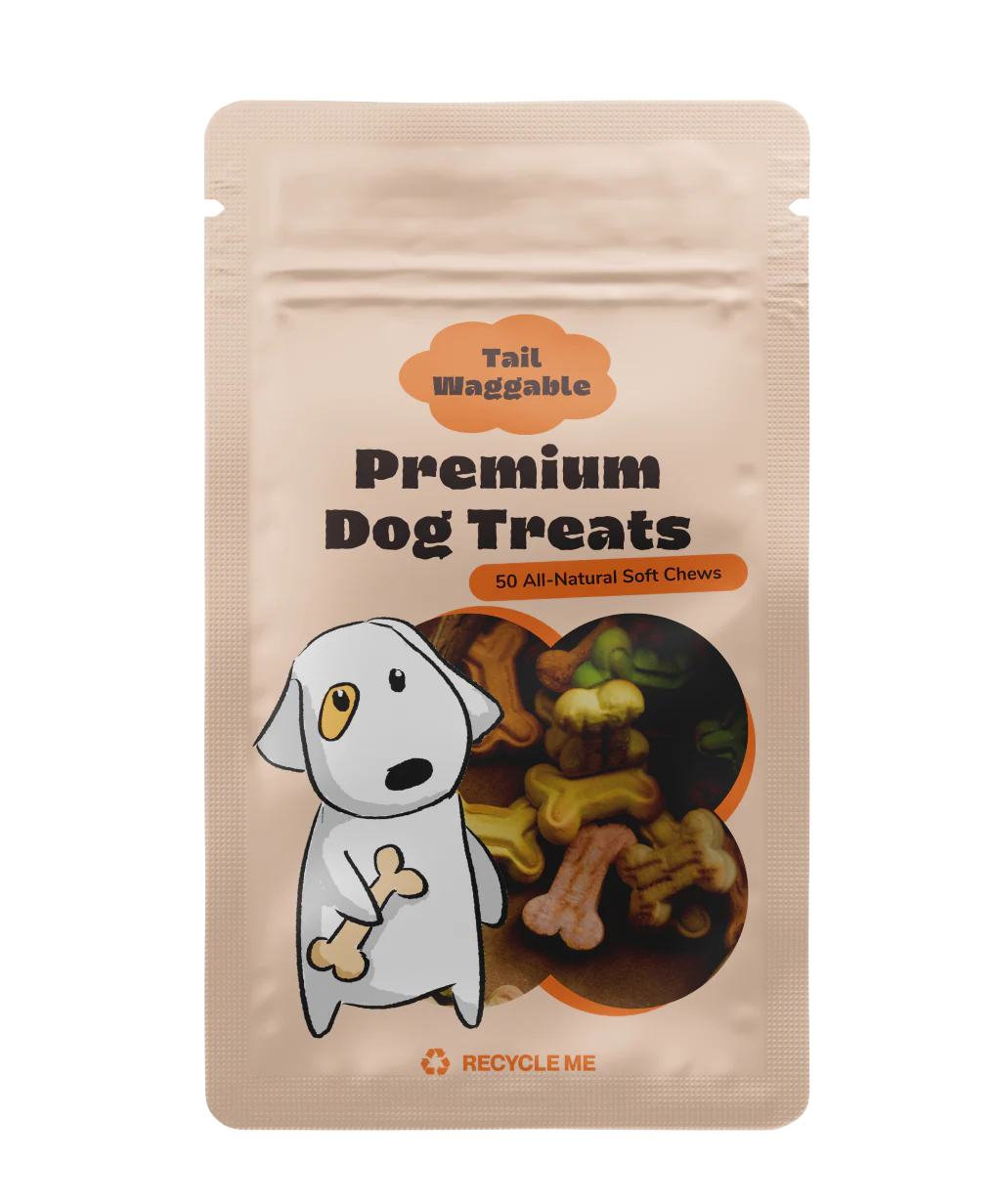
Treat and snack packaging uses smaller formats including three-side seal sachets, eight-side seal bags, and flow-wrapped individual pieces. This segment has the most flexibility for compostable material transitions because treat shelf life requirements are typically shorter and treat formats are smaller, making the barrier performance demands more achievable with compostable films. Home compostable PLA and PBAT flow-wraps are available for soft chew and treat applications with shorter shelf life windows. Paperboard boxes with fiber or compostable windows work well for harder treat formats. This is the most practical starting point for pet food brands beginning a sustainability transition because it involves the lowest volume, highest margin SKUs and the most accessible material options.
Fresh and refrigerated pet food trays for raw patties, fresh meal formats, and refrigerated products use molded fiber bagasse trays or rPET trays as the primary sustainable format options. Bagasse trays are compostable and handle the grease and moisture from raw meat formats with appropriate PFAS-free barrier coatings. rPET trays with peelable lids are recyclable where rigid PET is accepted. Both require cold chain compatible packaging design that maintains structural integrity at refrigerated and frozen temperatures.
Bulk plastic pails and tubs for large-quantity dry food are most commonly HDPE, with recycled HDPE at 90 percent post-consumer content now commercially available as a direct material substitute at meaningful cost parity for brands making recycled content commitments.
Sustainable Pet Food Packaging Trade-Offs Worth Understanding
Oxygen barrier performance is the technical constraint that limits sustainable material options more in pet food than in most other CPG categories. Kibble and dry pet food contain fats that oxidize and go rancid with oxygen exposure, making the oxygen transmission rate (OTR) of packaging a primary shelf life determinant. The 12 to 24 month shelf life targets standard in pet food retail require OTR performance that conventional multilayer laminates achieve reliably but that mono-material and paper-based alternatives must engineer specifically to match. Modern mono-PE films with advanced coating technologies are achieving OTR performance below 2 cubic centimeters per square meter per day without EVOH layers, which is the threshold for 18-month shelf life validation in most dry pet food applications. Requesting specific OTR data at realistic storage conditions from any sustainable film supplier is the essential verification step rather than accepting general category claims.
Puncture resistance is a secondary performance requirement that matters more in pet food than in many other categories because large bags of kibble are subject to stacking weights of 20 to 50 pounds on retail pallets and consumer handling that creates puncture and abrasion stress. Paper-based bags and thinner sustainable films must be validated for puncture resistance at your specific fill weight and distribution conditions before volume commitments are made.
EPR alignment is an increasingly relevant procurement consideration as extended producer responsibility programs in Colorado, Minnesota, Oregon, and other states begin assigning fees to non-recyclable packaging. Pet food brands with large flexible film volumes face meaningful EPR cost exposure if those films are non-recyclable multilayer laminates. Transitioning to mono-material PE or PP flexible films that are compatible with store drop-off recycling programs positions brands more favorably under EPR fee structures that distinguish between recyclable and non-recyclable flexible packaging.
How Pet Food Brands Choose Sustainable Packaging
Pet food packaging supplier selection requires matching barrier performance specifications to your specific product type and shelf life target before evaluating any sustainability credentials, because a film that cannot protect kibble through an 18-month shelf life creates product quality problems that override any sustainability benefit.
Using the 5 P's as a frame: Price for sustainable pet food packaging varies significantly by format and the transition pathway. Mono-material PE kibble bags have reached cost parity with conventional laminates at volume for many applications, making them the most economically accessible sustainable transition in the dry food segment. Paper-based bulk bags carry a modest premium but reduce plastic content dramatically enough to justify the investment for brands with plastic reduction commitments. Compostable treat films carry premiums of 20 to 40 percent over conventional equivalents that are more manageable given the smaller volumes and higher margins in the treat segment. Performance is the non-negotiable gate in this category: OTR validation at your specific shelf life target, puncture resistance testing at your fill weight and distribution conditions, reseal performance testing for consumer-facing formats, and product safety validation confirming no migration from recycled content materials into food contact surfaces. Preference reflects your retail channel and brand positioning: premium pet food brands at natural and specialty retail have sustainability claim expectations that differ from mass market programs, and the format and material choices that resonate in one channel may not translate to the other. Proof covers PCR content certification (ISCC or equivalent) for any recycled content claims, How2Recycle certification for any recyclable flexible film claims, compostability certification to named standards for any compostable claims covering the complete package assembly, and PFAS-free documentation for any coated paper or fiber formats. Partner quality means a supplier with pet food-specific barrier performance experience and the ability to provide validated shelf life data with your formulation rather than general category performance claims.
Ask suppliers for OTR data at the storage temperature and humidity conditions relevant to your distribution channel. Ask for PCR content certification documentation rather than accepting general recycled content claims. Ask for references from pet food brands running their material at commercial scale with validated shelf life data.
Why are large dog food bags so difficult to make recyclable?

What is the most practical starting point for a pet food brand beginning a sustainability transition?