

Paper Bottles vs Glass vs Plastic: The Carbon Footprint Data
Independent LCAs show PET typically has the lowest single-use GHG footprint, paper bottles cut glass emissions 84%, and refillable glass is a game changer!
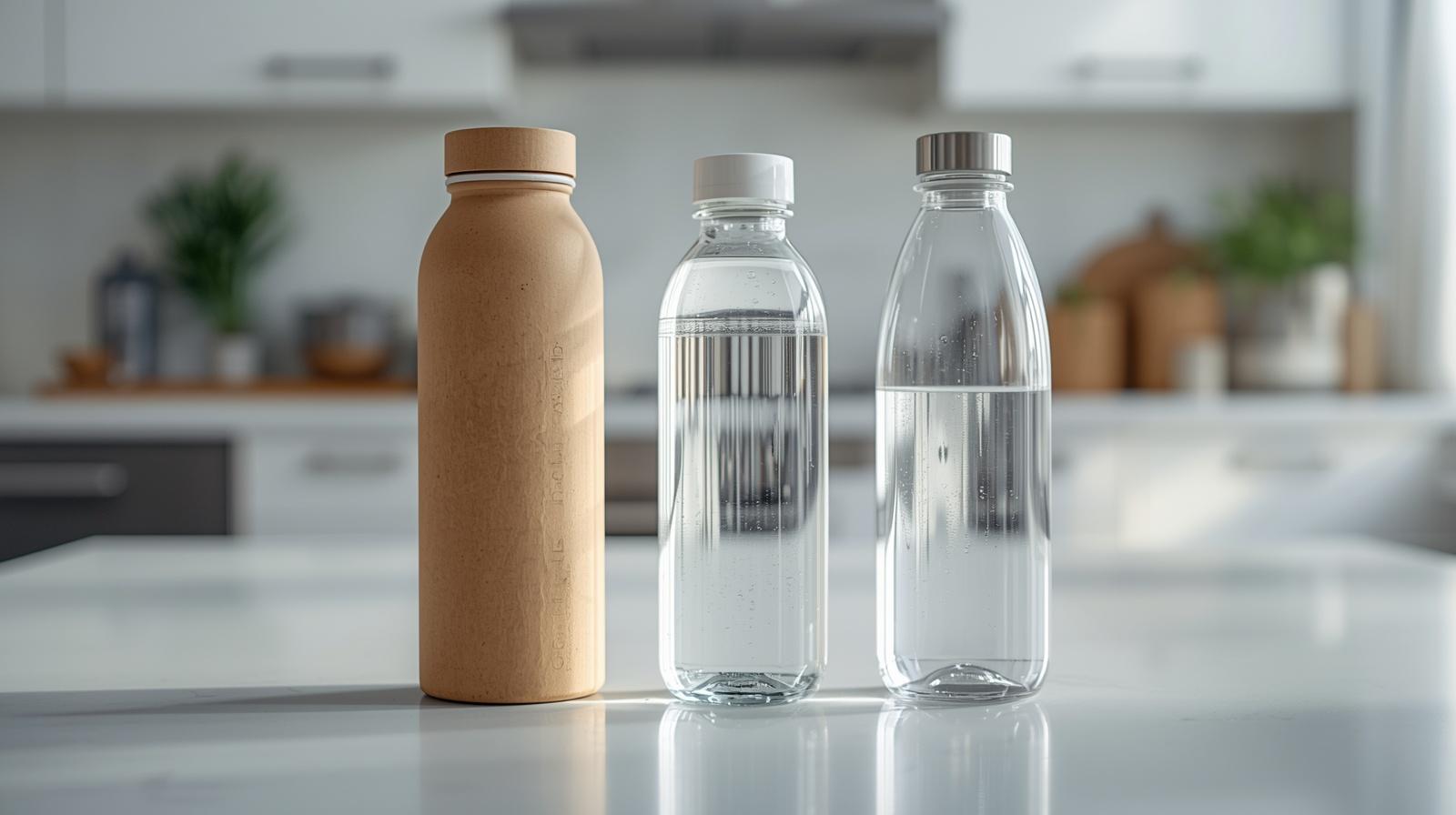
Every packaging format has a marketing story. Paper bottles promise to eliminate plastic. Glass suppliers tout premium sustainability. PET recyclers point to circularity. For a brand trying to make an honest decision, the noise is overwhelming. What does the independent science actually say about paper bottles vs glass bottles vs plastic?
The Carbon Footprint Reality: What the LCAs Actually Show
The most comprehensive recent analysis comes from McKinsey's 2022 Climate Impact of Plastics study, which modeled greenhouse gas emissions across beverage container formats using U.S. data. For single-use soft drinks, the baseline results are striking: PET plastic bottles generate approximately 435 kg CO2e per 100,000 ounces, aluminum cans produce roughly 890 kg CO2e, and glass bottles emit about 1,170 kg CO2e.
That pattern holds across multiple independent analyses. A 2023 peer-reviewed study published in Environmental Science & Technology reviewed 16 packaging applications and found that replacing plastics with alternatives typically increases greenhouse gas emissions by 10% to 90%. In beverage packaging specifically, glass and aluminum often carry roughly two to three times the carbon footprint of PET in single-use formats.
The reason is straightforward: glass requires energy-intensive melting at high temperatures, and its weight dramatically increases transport emissions. Aluminum production is energy-hungry, though the material's high recycling rate helps close the gap. PET, by contrast, is lightweight and requires less energy to produce per unit in most current manufacturing contexts.
This doesn't mean PET is perfect or that glass and aluminum have no role. It means the starting point for any honest comparison is acknowledging where the carbon footprint baseline sits today for single-use beverage packaging.
Paper Bottles: What They Are (and Aren't)
Paper bottles are not bottles made entirely of paper. They are fiber-based composite packages with a thin polymer barrier or liner, typically HDPE, PET, PEF, or PEN. The fiber shell provides structure and reduces plastic mass, but the liner is necessary to hold liquids and protect contents from moisture and oxygen.
Paboco's market-ready paper bottle, for example, is composed of approximately 85% paper with less than 15% HDPE barrier. Diageo trialed a 90% paper-based Johnnie Walker bottle in Edinburgh bars, while Carlsberg piloted a fiber bottle with a bio-based PEF liner from Avantium. Each design trades off barrier performance, recyclability, cost, and carbon footprint differently.
The Carbon Footprint of Paper Bottles
Credible, independently verified life cycle assessments of paper bottles remain limited. The most robust public data comes from Frugalpac's wine bottle, assessed by Intertek. That LCA reports approximately 91.9 grams CO2e per 750 mL bottle, compared to roughly 440 grams for a typical glass wine bottle. That represents an 84% reduction and suggests meaningful climate benefits for wine and spirits shipped long distances or sold direct-to-consumer.
Other suppliers claim comparable or better performance. Pulpex states its design achieves roughly 90% lower emissions than glass and about 30% lower than PET, but those figures have not been published in peer-reviewed or third-party-verified LCA reports. Until independent assessments are available, treat manufacturer claims as indicative rather than definitive.
The carbon advantage of paper bottles over glass is real and often substantial. The comparison to PET is more nuanced and depends heavily on product type, transport distance, recycled content, and end-of-life modeling assumptions.
The Recycling Reality
Recyclability claims for paper bottles vary widely and often overstate real-world acceptance. Paboco markets its bottle as "recyclable as paper," but composite formats with liners can fail curbside sortation if the liner is not easily separated. Industry observers note that many paper bottle designs require manual separation to avoid contamination, and acceptance varies significantly by municipality and material recovery facility.
If a paper bottle liner ends up in the paper stream, it can contaminate fiber recycling. If the fiber shell ends up in the plastic stream, it creates processing problems. Some formats are designed for the fiber to be recycled while the liner goes to landfill or energy recovery. Others aim for full recyclability in one stream. The key is to verify local acceptance before making on-pack recyclability claims, not to assume a "paper bottle" will be accepted wherever paper is collected.
Glass Bottles: Heavy on Production, Better with Reuse
Glass carries the highest single-use carbon footprint among mainstream beverage containers, primarily due to furnace energy and transport weight. A glass bottle can weigh up to 40 times more than a PET bottle of the same volume, and melting silica, soda ash, and limestone requires sustained high heat. Those two factors dominate glass packaging's greenhouse gas profile.
In the United States, glass container recycling rates hover around 30% according to the Glass Packaging Institute, with significantly higher recovery in states that have deposit-return systems. Increasing recycled cullet content in furnaces reduces energy demand. Each 10% increase in cullet can cut furnace energy by approximately 2% to 3%, and the industry is investing in hybrid electric furnaces, hydrogen blending, and other decarbonization pathways to lower production emissions.
Ardagh's NextGen hybrid furnace, for instance, targets up to 60% reductions in furnace-level CO2 emissions. If the glass industry achieves its decarbonization goals, production emissions will drop materially over the next decade. Transport weight, however, will remain a structural disadvantage for single-use glass distribution.
Refillable Glass Changes the Equation
Reuse transforms glass's environmental profile. A comprehensive review by Zero Waste Europe and Reloop found that refillable glass bottles can outperform single-use PET, single-use glass, and single-use aluminum after a relatively small number of trips. Reported break-even points range from as few as 2 to 3 cycles in favorable conditions (short transport loops, efficient washing, optimized bottle design) to 10 to 20 cycles in other contexts.
The key variables are reverse logistics (how far empty bottles travel back to the filling facility), washing energy and water use, breakage rates, and bottle weight. Standardized, lightweight refillable bottles in deposit-return systems with local or regional distribution can deliver significantly lower life-cycle emissions than any single-use format. Glass is well-suited to reuse because it is inert, durable, and can be washed and refilled many times without material degradation.
For brands with access to deposit systems, on-premise channels, or direct-to-consumer models with reverse logistics, refillable glass is often the lowest-impact option available today. For brands distributing single-use glass bottles nationally or internationally, the carbon footprint is typically the highest among beverage packaging options.
PET Plastic Bottles: Today's Lowest Single-Use Footprint
Polyethylene terephthalate bottles dominate the beverage market for a reason: they are lightweight, shatter-resistant, energy-efficient to produce, and carry the lowest greenhouse gas emissions among mainstream single-use containers in most current analyses. That doesn't resolve concerns about plastic pollution, marine litter, or recycling rates, but it does establish the carbon baseline.
U.S. PET bottle recycling rates were 30.2% in 2024 and 32.5% in 2023, according to NAPCOR. Those figures lag behind aluminum and are roughly comparable to glass nationally, though deposit states collect about 3.5 times more PET bottles per capita than non-deposit states. Policy is beginning to shift the equation: California's AB 793 mandates 25% recycled PET content in covered beverage bottles by 2025 and 50% by 2030, while the EU requires 25% rPET in single-use PET beverage bottles by 2025 and 30% by 2030.
Higher recycled content reduces the carbon footprint of PET bottles by displacing virgin resin production. A PET bottle made with 50% rPET typically has a meaningfully lower GHG profile than one made entirely from virgin material, further extending PET's advantage in single-use applications. Designing bottles for recyclability (avoiding problematic labels, inks, and additives per APR and How2Recycle guidance) and participating in deposit-return systems both improve PET's real-world circularity.
PET's Limitations
The environmental case for PET is strongest on climate impact and weakest on end-of-life and pollution. Even at a 30% recycling rate, the majority of PET bottles in the U.S. are landfilled or incinerated. Lightweight PET is prone to litter, and plastic pollution in waterways and oceans is a significant and visible problem that carbon footprint data alone does not capture.
For brands, the trade-off is real: PET typically minimizes greenhouse gas emissions in single-use beverage distribution, but it requires robust end-of-life infrastructure and behavior change to avoid contributing to plastic waste. That is not a reason to dismiss PET, but it is a reason to pair PET packaging with commitments to high recycled content, design for recyclability, and support for deposit-return and extended producer responsibility policies.
The Recyclability Question: Claims vs Reality
Recyclability claims mean different things for different materials, and the gap between "technically recyclable" and "widely recycled in practice" matters.
PET plastic bottles are widely accepted in curbside recycling programs across the United States and Europe. Acceptance, however, does not equal recycling. Contamination, sorting errors, and lack of end markets mean a significant share of collected PET is still landfilled or exported. Designing to APR standards and using How2Recycle labels helps, but real-world recycling depends on local infrastructure and participation.
Glass bottles are technically infinitely recyclable without quality loss, and glass collected in deposit systems typically achieves high recycling rates. Curbside glass recycling is more variable. Color sorting, ceramic and metal contamination, and breakage during collection all affect cullet quality and recyclability. Clean, color-sorted cullet commands a premium and directly displaces virgin material and furnace energy.
Paper bottles present the most complex recyclability picture. Claims of "recyclable as paper" or "recyclable in existing systems" often depend on the liner being separated, which most consumers will not do without explicit instruction and easy mechanisms. Some formats are designed to be sorted into paper streams where the liner is removed at the recycling facility. Others are intended for specialized collection. Until paper bottle volumes scale and recycling protocols are standardized, assume that acceptance will vary by region and that clear consumer communication is essential.
When Each Format Makes Sense
The right packaging choice depends on product type, distribution model, volume, and market infrastructure. No single material is best in all contexts.
Paper Bottles
Strong fit: Premium wines and spirits sold direct-to-consumer or via e-commerce, where freight emissions are significant and glass's weight penalty is high. Products with lower barrier requirements (non-carbonated, lower ABV, shorter shelf life). Brands with access to verified recycling pathways for the specific paper bottle format they choose.
Challenges: High-ABV spirits and carbonated beverages, which stress barrier requirements. Markets without clear recycling acceptance for composite fiber packaging. High-volume products where cost premiums over PET are prohibitive.
Glass Bottles
Strong fit: Refillable systems with deposit-return infrastructure and local or regional distribution. On-premise beverage service (restaurants, bars, cafes) where reverse logistics are manageable. Premium products where glass communicates quality and shelf appeal justifies the footprint.
Challenges: National or international single-use distribution, where transport emissions dominate. Products targeting the lowest possible carbon footprint in a single-use model. Markets without deposit systems or robust glass recycling infrastructure.
PET Plastic Bottles
Strong fit: Mass-market beverages with wide distribution where minimizing single-use greenhouse gas emissions is a priority. Carbonated drinks requiring strong barrier and pressure resistance. Products where light weight and shatter resistance reduce breakage and spoilage. Brands able to source high-recycled-content PET and design to APR standards.
Challenges: Consumer and regulatory pressure to reduce plastic packaging. Litter and pollution visibility concerns. Markets where PET collection infrastructure is weak and recycling rates are very low.
The Future: What's Changing
Three trends are shifting the landscape.
Paper bottle commercialization. Paboco, Pulpex, Frugalpac, and others have moved from pilots to early market availability. Expect more consumer-facing launches in wine, spirits, and personal care over the next few years, with independent LCAs and recycling infrastructure clarity improving as volumes grow.
Glass decarbonization. Hybrid and electric furnaces, green hydrogen blending, and higher cullet content are all advancing. If the glass industry meets its targets, production emissions will drop materially within a decade, narrowing the gap with other materials in single-use applications while maintaining glass's advantages in reuse.
Recycled content mandates and deposit systems. Policy is driving both higher recycled content in PET and better collection systems for all beverage containers. California, the EU, and other jurisdictions are ratcheting requirements upward, which will shift baseline LCAs for all formats as recycled content displaces virgin material production.
The Honest Summary
For single-use beverage packaging distributed widely today, PET plastic bottles typically have the lowest greenhouse gas footprint, followed by aluminum cans, with glass bottles carrying the highest emissions due to production energy and transport weight. Independent life cycle assessments consistently show this pattern across multiple studies and geographies.
Paper bottles can significantly reduce emissions compared to single-use glass, particularly for wine and spirits where transport weight matters and barrier requirements are moderate. Early LCAs suggest reductions of 80% or more versus glass are achievable. The comparison to PET is closer and depends on specific designs, recycled content, and transport scenarios. Recyclability for paper bottles is evolving and varies by format and region; verify local acceptance before making claims.
Refillable glass changes the calculation entirely. With efficient reverse logistics, optimized bottle design, and a modest number of reuse cycles, refillable glass can outperform all single-use alternatives on climate impact. The break-even point varies, but robust deposit-return systems and local distribution loops make reuse a compelling option for many beverage brands.
The path forward is not to declare one material the winner. It is to choose the format that fits your product, your distribution model, your volume, and the infrastructure available in your markets. Use independent LCAs, verify recyclability claims with local programs, design for circularity, and be honest about the trade-offs. That is how brands make better packaging decisions.
Ready to find the right sustainable beverage packaging for your brand? Explore verified suppliers, compare formats with transparent data, and get clarity on what actually works for your product and market. The honest answers are out there. You just need a guide who will tell you the complete story.
Packaged Sustainable Team